Exodus 14:14 — The Lord Will Fight for You
When the sea was in front and the army was behind, Moses told Israel to stand still and watch. What this verse means — and why it is harder to believe than almost any other promise in the Bible.
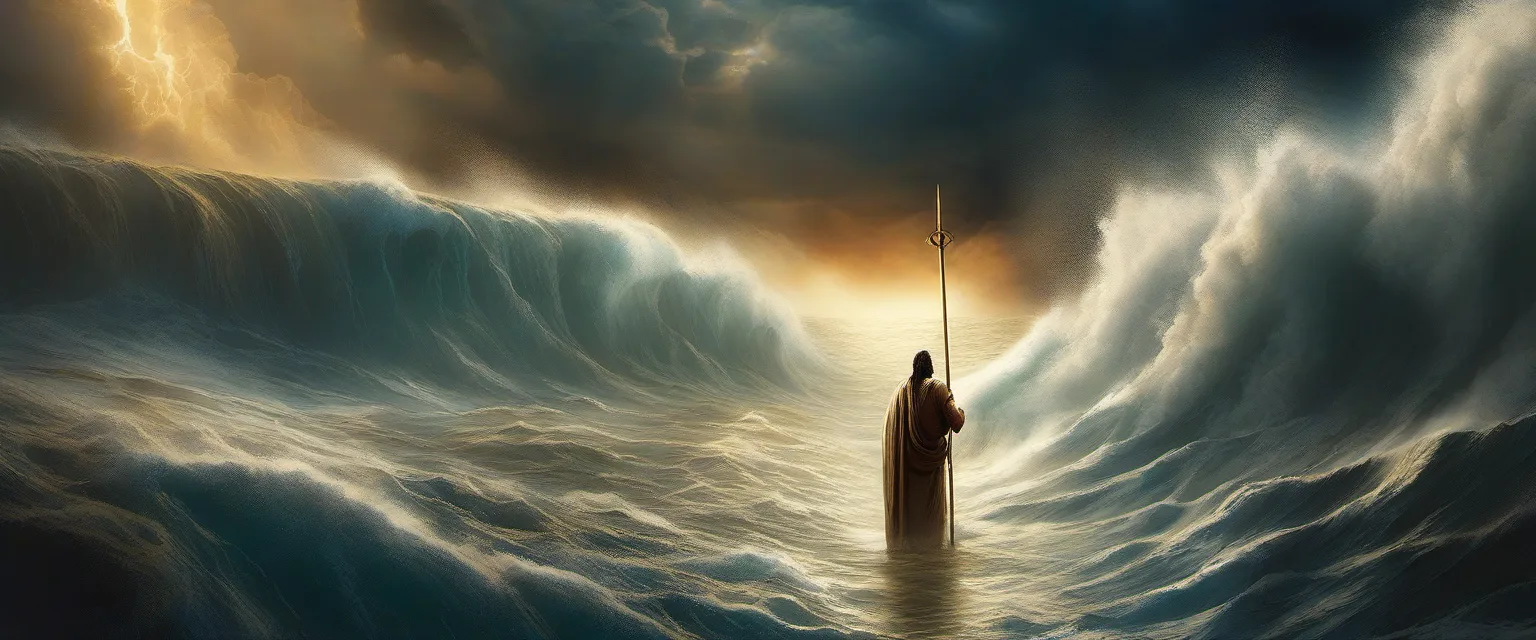
There is a moment in the Exodus story when every human instinct says run. The Red Sea stretches ahead like an impassable wall of water. The Egyptian army — chariots, horses, the full military machine of the ancient world — thunders up from behind. The Israelites are trapped in a narrow corridor between the deep and the sword. They are unarmed. They are terrified. And Moses says something that sounds almost absurd: “The LORD will fight for you; you need only to be still” (Exodus 14:14).
It is one of the most quoted verses in the Bible, and one of the most misunderstood. It appears on coffee mugs, inspirational posters and social media graphics — usually presented as a gentle reassurance that everything will work out. But in its original context, it is something far more radical: a command to stop striving when God has already decided to act, spoken to people who are seconds away from annihilation and have no way out.
The setup: from plagues to pursuit
To feel the weight of the verse, you have to understand the situation. God has just shattered Egypt with ten plagues, culminating in the death of the firstborn and the passover — the most devastating event in the ancient Near East’s most powerful empire. Pharaoh has let Israel go. The people have walked out of slavery with Egyptian wealth in their pockets (Exodus 12:35–36) and a pillar of cloud and fire leading them.
Then God does something strange. Instead of leading them straight to the promised land by the coastal road — the obvious route — he sends them south into the wilderness, toward the Red Sea. “The LORD said to Moses, ‘Tell the Israelites to turn back and encamp near Pi Hahiroth, between Migdol and the sea’” (Exodus 14:1–2). The text is explicit about why: “I will harden Pharaoh’s heart, and he will pursue them, and I will gain glory through Pharaoh and all his army.”
God is not making a mistake. He is setting a trap — not for Israel, but for Egypt. The sea corridor is the bait.
Pharaoh takes it. When he hears that Israel has seemingly wandered into a dead end, he reverses his decision and mobilises his chariots. The Israelites look up and see the Egyptian war machine approaching across the flat desert floor. The reaction is immediate and devastating: “They were terrified and cried out to the LORD” (Exodus 14:10).
The complaint and the answer
What comes next is one of the most honest prayers in the Bible. The people turn on Moses — and, by extension, on God: “Was it because there were no graves in Egypt that you brought us out to the desert to die?” (Exodus 14:11). It is bitter, sarcastic and completely human. They would rather have died as slaves in Egypt than face the unknown with God. Slavery is at least predictable. Freedom is terrifying.
Moses’ answer in verse 13 is the setup for verse 14: “Do not be afraid. Stand firm and you will see the deliverance the LORD will bring you today.” And then the key line: “The LORD will fight for you; you need only to be still.”
The Hebrew is precise. The word translated “fight” is yilḥam — it carries the sense of battle, of war, of a contest decided by force. God is not offering comfort; he is announcing military action. And the word translated “still” is ḥarshû — which can mean “silent,” “quiet,” or “ceased from activity.” The command is not “relax and have faith.” It is “stop moving. This is not your fight.”
What “still” does not mean
This is where the verse is most often abused. It is not a blanket command for passivity in every situation. It is not a promise that God will remove all difficulty if you simply stop trying. Moses still has to stretch out his staff over the sea (Exodus 14:16). The people still have to walk through the parted water on dry ground. God acts; they cooperate. There is stillness and there is obedience, and they are not the same thing.
The “stillness” here is specific to the moment. It means: do not panic. Do not try to negotiate with Pharaoh. Do not run back to Egypt. Do not try to fight the most powerful army in the world with bare hands. Trust that the God who destroyed Egypt with plagues is not out of options at a beach.
The distinction matters. In other parts of Scripture, God commands movement, courage, aggressive action. David is told to fight. Joshua is told to march. The apostles are told to go. The Christian life is not one of perpetual stillness. But there are moments — every believer knows them — when the only faithful response is to stop striving and let God do what only God can do.
The crossing
What follows is the most dramatic scene in the Old Testament. The angel of God moves between the Israelites and the Egyptians. The pillar of cloud shifts position. A strong east wind blows all night, and the sea is divided: waters stacked like walls on either side, a corridor of dry ground through the middle (Exodus 14:21–22). Israel walks through. The Egyptians follow. God removes the wheels of the chariots. At Moses’ word, the waters return. The army of Egypt is swallowed whole.
The scale of the deliverance is the point. This is not a narrow escape. It is not a lucky break. It is a God who commands the ocean to stand aside, who drowns the greatest military force of the age, and who does it all in front of a newly freed nation of former slaves so that they will never forget who delivered them and what he is capable of.
The song that follows in Exodus 15 — the Song of Moses, one of the oldest passages in the Bible — names the theological conclusion: “The LORD is my strength and my defense; he has become my salvation” (Exodus 15:2). The God who fights is also the God who saves. The two are the same act.
The echo through Scripture
Exodus 14:14 is not an isolated promise. It is a pattern. The same God who fights for Israel at the Red Sea fights for them at the Jordan (Joshua 4), at the Sun (Joshua 10), and through the judges when they had “no swords” (Judges 4:15). The New Testament picks up the same pattern with different language: “If God is for us, who can be against us?” (Romans 8:31). The cross is the ultimate Exodus — God fighting a battle humanity could not fight, winning a victory humanity could not win, and calling his people to trust rather than to strive.
Jesus’ own words carry the echo: “In this world you will have trouble. But take heart! I have overcome the world” (John 16:33). The stillness of Exodus 14:14 is the stillness of every believer who faces an impossible situation and chooses to trust the character of God over the evidence of their eyes.
When to be still
The hardest part of Exodus 14:14 is not understanding it; it is obeying it. The sea is real. The army is real. The fear is real. And God says: stand still.
The verse does not promise the absence of trouble. It promises the presence of a God who fights. It does not say the enemy will not come. It says the enemy will not win. And it asks for the one thing that is hardest to give when the world is closing in: the willingness to stop, to be silent, and to let God be God.
That is not passive. It is one of the most active decisions a human being can make.
The Exodus is the central event of the Old Testament — see Genesis 1–3: The Story Everything Else Explains for where the story begins, The Gospel of John: Believing Is Seeing for John’s “in the beginning” that echoes the Exodus pattern, and Why Jesus Taught in Parables for how Jesus used stories to reveal the same God who acts.
Written by
JellyPuff Media
Editor-in-Chief
Auckland-based publisher producing warm, honest Bible study content for readers everywhere.
Keep reading
Related articles
Praying With the Psalms: How the Bible's Songbook Becomes Your Prayer Book
The Psalms were not written to be read — they were written to be prayed. How to make 150 ancient songs your daily language with God, from lament to praise.
The Book of Numbers: In the Wilderness, Where God Formed a People
Numbers is not a census record — it is the story of a rescued people who preferred Egypt to the Promised Land. Between Sinai and Moab, God counted, led, judged and preserved Israel in the wilderness — and revealed what it means to be his people before they ever set foot in the land.

Song of Solomon 2:8–17 — Love Leaping Over the Mountains
The voice of my beloved! Look, he comes, leaping over the mountains. The most vivid love poem in the Bible, set in the Judean hills at dawn — and what it reveals about the God who pursues.