Song of Solomon 2:8–17 — Love Leaping Over the Mountains
The voice of my beloved! Look, he comes, leaping over the mountains. The most vivid love poem in the Bible, set in the Judean hills at dawn — and what it reveals about the God who pursues.
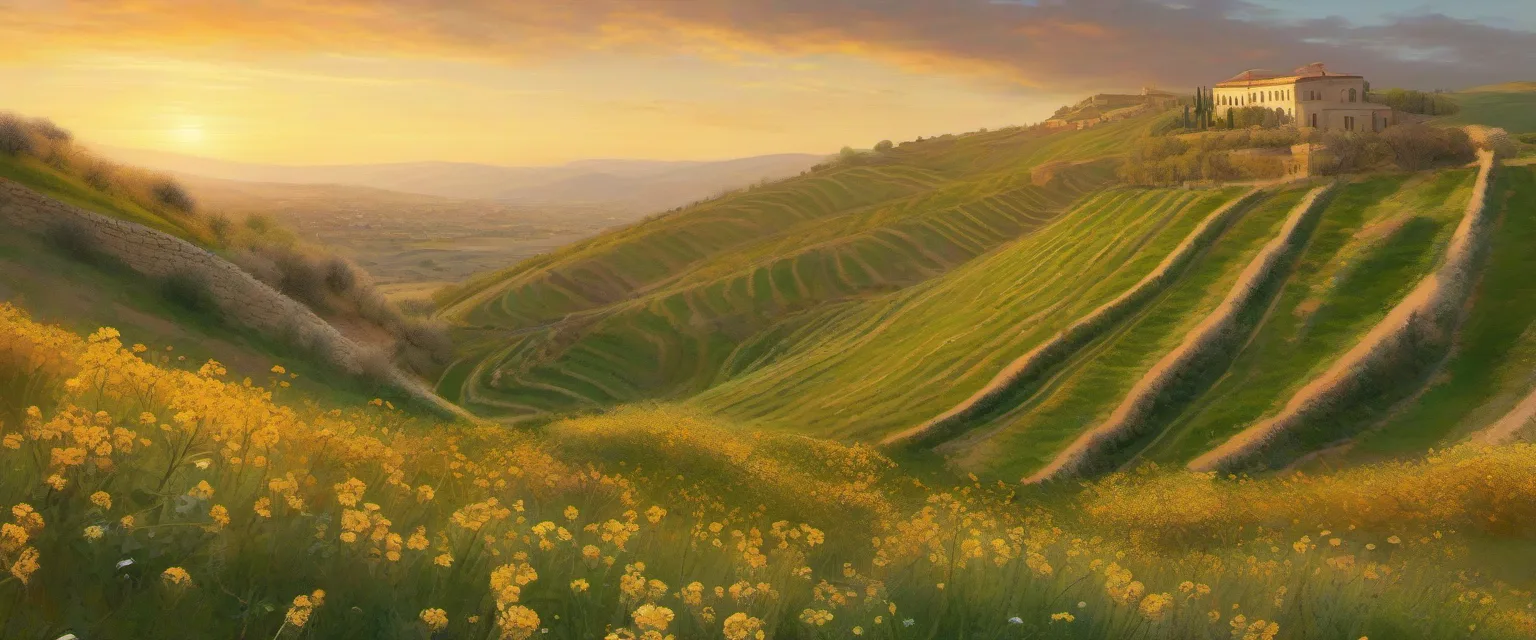
“Listen! My beloved! Look, here he comes, leaping across the mountains, bounding over the hills” (Song of Solomon 2:8).
Most of the Bible’s love language is metaphor — God as shepherd, Israel as vineyard, the church as bride. Song of Solomon is the real thing. No metaphor, no allegory layered on top. Just a man and a woman, their voices braided together in some of the most gorgeous poetry ever written. And yet, from the earliest centuries, readers have heard something larger in these words: the love between God and his people, between Christ and the church.
Both readings are true. That is the strange genius of this book.
The voice at dawn
The passage opens with the woman hearing her beloved’s voice before she sees him. He is coming to her across the landscape of Judea — over the ridgelines, through the valleys, at first light. The image is kinetic: he does not walk, he leaps. There is urgency in the movement, eagerness, a lover who cannot wait.
“Arise, my darling, my beautiful one, come with me” (Song of Solomon 2:10). The invitation is to leave the ordinary life — the winemaking, the harvesting, the enclosed garden — and come out into the open. Spring has arrived. The season has changed.
In the Hebrew, the word for “arise” is qumi — the same word used throughout the prophets when God calls a nation or a person to wake up, to stand, to move. There is a cosmic quality to this love call. It is personal and immediate, but it carries the weight of every divine summons in Scripture.
The landscape as character
The geography matters. Song of Solomon is set in the land between Lebanon and Carmel, in valleys and vineyards, among wildflowers and flocks of goats. The man compares the woman to a “gazelle or a young deer” (Song of Solomon 2:17) — not because she is fragile, but because she moves through this terrain with the same grace as the wild animals that live there.
The hills of Judea are not the gentle, green hills of an English countryside. They are dry, limestone ridges, steep and rugged, with narrow wadis cutting between them. For someone to come “leaping over” them means covering difficult ground at speed. The image is of a lover who will not let any obstacle slow him down.
This is the same landscape where David tended sheep before he became king, where Elijah ran ahead of Ahab’s chariot in the rain, where Jesus would later walk from village to village. The Bible’s story is told across these same hills, and the song places its love story right in the middle of them.
The enclosed garden
The woman responds with one of the book’s most beautiful images: “My garden is enclosed, my sister, my bride; a sealed spring, a walled garden” (Song of Solomon 4:12). She is not available to everyone. Her love is guarded, set apart, precious precisely because it is not given carelessly.
In the ancient Near East, a sealed garden was a symbol of fertility, abundance, and exclusivity. Water was scarce; a garden with its own spring was a treasure. The image runs through Scripture — from Eden, the original enclosed garden, to the temple courts, to Revelation’s vision of paradise restored.
The man’s eagerness to reach her, and her self-possession in waiting — together they form a picture of love that is both passionate and ordered, wild and holy.
Why the church reads this book
The early church fathers debated Song of Solomon fiercely. Origen wrote an entire commentary arguing it was an allegory of Christ and the soul. Gregory of Nyssa read it as a journey of the soul toward God, step by step, each chapter a deeper stage of union. Others insisted it was simply a love poem, and spiritualizing it stripped it of its power.
The wisest readers have held both together. The Song works as pure love poetry — it does not need an allegorical key to be beautiful. But it also works as a window into the kind of love God has for his people: eager, relentless, personal, willing to cross any distance. The man leaping over the mountains is the echo of the Shepherd leaving the ninety-nine to find the one. The sealed garden is the echo of a people set apart, loved not for their usefulness but for themselves.
Paul picks up the same image when he writes that Christ loved the church and gave himself up for her, “to make her holy, cleansing her by the washing with water through the word” (Ephesians 5:25–26). The bridegroom of Song of Solomon and the Christ of the epistles are the same figure, seen from different angles.
Reading it honestly
The temptation with Song of Solomon is to either over-allegorize it (losing the humanity) or over-literalize it (losing the holiness). The text resists both. It is a love poem written by someone who understood that human love, at its most intense and most faithful, is a real image of divine love. Not a symbol cooked up by theologians — a reality embedded in the way the world is made.
The man leaps over mountains at dawn because love will not be delayed. The woman guards her garden because love is not cheap. The landscape is real, the bodies are real, the desire is real. And all of it, every bit, points beyond itself to the love that made the mountains in the first place.
“Set me as a seal upon your heart, as a seal upon your arm; for love is as strong as death, its jealousy as unyielding as the grave. It burns like blazing fire, like a mighty flame. Many waters cannot quench love; rivers cannot sweep it away” (Song of Solomon 8:6–7).
That is where the book is heading. And it is worth the journey through the hills to get there.
Written by
JellyPuff Media
Editor-in-Chief
Auckland-based publisher producing warm, honest Bible study content for readers everywhere.
Keep reading
Related articles
The Book of Numbers: In the Wilderness, Where God Formed a People
Numbers is not a census record — it is the story of a rescued people who preferred Egypt to the Promised Land. Between Sinai and Moab, God counted, led, judged and preserved Israel in the wilderness — and revealed what it means to be his people before they ever set foot in the land.
The Book of Job: The Heavenly Wager and the God Who Speaks
Job opens in the heavenly council, not in a hospital room. The friends offer a tidy theology of retribution; Job answers with a demand for an advocate. Then the whirlwind answers with God himself — the deepest question in Scripture, asked in the oldest story.
Praying With the Psalms: How the Bible's Songbook Becomes Your Prayer Book
The Psalms were not written to be read — they were written to be prayed. How to make 150 ancient songs your daily language with God, from lament to praise.