The Book of Numbers: In the Wilderness, Where God Formed a People
Numbers is not a census record — it is the story of a rescued people who preferred Egypt to the Promised Land. Between Sinai and Moab, God counted, led, judged and preserved Israel in the wilderness — and revealed what it means to be his people before they ever set foot in the land.
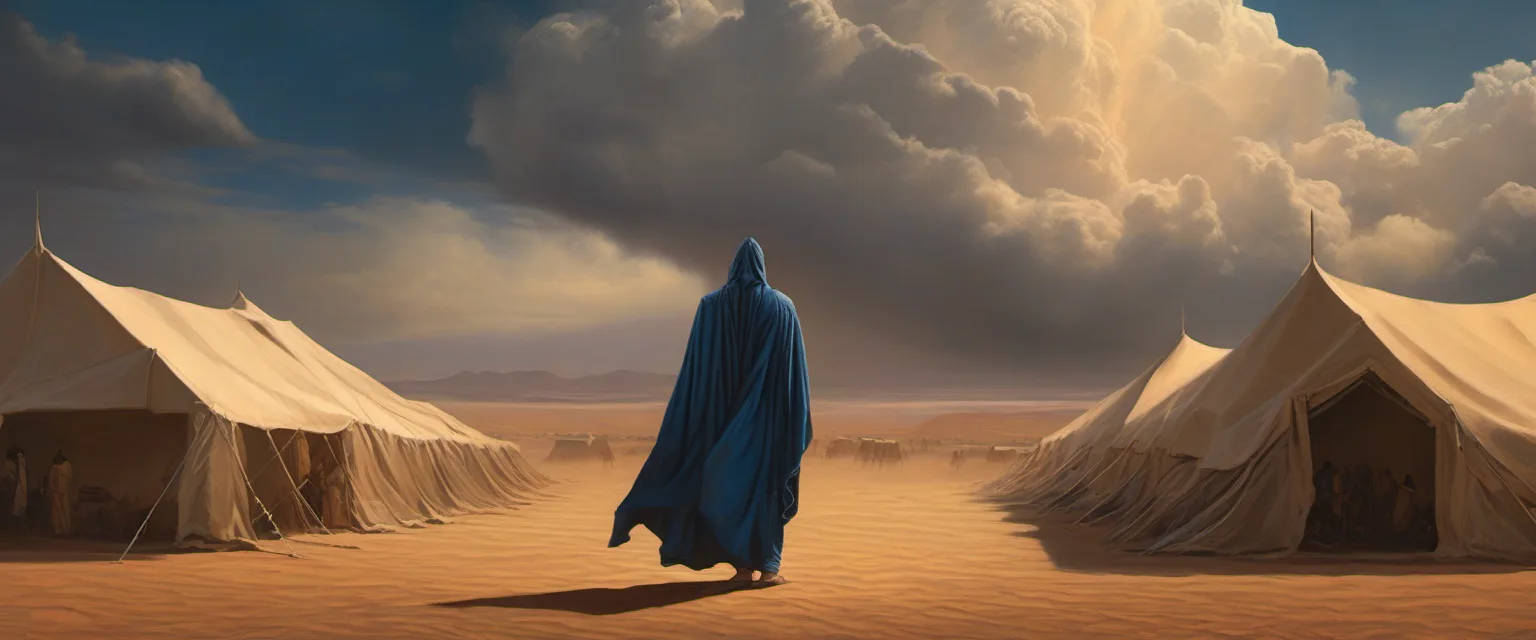
Numbers is the book Christians skip. Open it and you find lists — censuses, tribal tallies, marching orders — then a travel diary that seems to go in circles, then more laws. No burning bush, no golden calf of Exodus, no poetry of Leviticus. Even the Hebrew name gives it away: Bemidbar — “in the wilderness.” Not “in the garden” or “in the land.” In the waste.
And that is precisely the point. Numbers is not about getting to the wilderness. It is about what God does in it. Between Sinai and Moab — between the mountain where Israel received the Law and the plains where Moses would preach his final sermons in Deuteronomy — this book follows a people who had been delivered from slavery but had not yet learned to be a people. They were counted, arranged, led by cloud and fire, fed from heaven, and yet they complained their way through thirty-eight years of sand until a new generation stood where their parents had refused to stand.
If Exodus shows God saving his people and Leviticus shows God dwelling among them, Numbers shows God forming them — painfully, patiently — in the place where there was nothing to trust except Him.
Why “Numbers” — and why “Bemidbar”
The English title comes from the two great censuses that frame the book: one at the beginning in the wilderness of Sinai (Numbers 1:1–46), one at the end on the plains of Moab (Numbers 26:1–65). The first counts the generation that left Egypt; the second counts the generation that would enter Canaan. Between those two counts, an entire generation dies.
The numbers are not bureaucracy. They are theology. God knows his people by name and by number, tribe by tribe, tent by tent. In a story where Israel feels anonymous and lost — “were there no graves in Egypt?” (Exodus 14:11) — the opening chapters answer: every person is counted, every clan has a place around the tent.
In Hebrew the book is called Bemidbar, “in the wilderness,” from its first word: wayedabber YHWH el-Mosheh bemidbar Sinai — “And the LORD spoke to Moses in the wilderness of Sinai” (Numbers 1:1). That title is truer to the book’s heart than “Numbers.” The wilderness (midbar) in Hebrew is not just a desert. It is the dabar place — the place of the word. Same root: midbar (wilderness) and dabar (to speak). The wilderness is where God speaks. He speaks from the tent, from the cloud, from the mountain’s edge. The people will spend forty years learning to listen.
Jewish tradition noticed a beautiful irony: you could have expected a book called “In the Wilderness” to be about geography. It is about people. And you could have expected a book called “Numbers” to be about arithmetic. It is about faith.
The map: three places, nearly forty years
Numbers covers the longest stretch of time in the Pentateuch but the fewest miles on a map. Its narrative moves in three great blocks:
1. At Sinai (ch. 1–10:10) — Ordered for the journey. Israel has been camped at Sinai for almost a year. Leviticus gave them holiness; Numbers gives them order. The census arranges the twelve tribes in a vast square around the Tabernacle — three tribes on each side — with the Levites encamped closest to the Tent, “guarding” the holy center (Numbers 1:53). The arrangement is liturgical, not military: the glory of God dwells in the center, and the entire nation is ordered around His presence. Trumpets are made for signaling, the cloud lifts, and the people finally set out “on the twentieth day of the second month of the second year” (Numbers 10:11). It is one of the most hopeful moments in the Torah. They are leaving Sinai for Canaan. The journey should have taken eleven days (Deuteronomy 1:2).
2. In the wilderness of Paran (ch. 10:11–21:35) — Rebellion, judgment, and daily grace. This is the heart of the book and the reason it is uncomfortable to read. Almost as soon as the cloud lifts, the complaining begins — and it does not stop.
3. On the plains of Moab (ch. 22–36) — A new generation at the edge of the land. With the old generation gone, Israel faces the nations east of the Jordan, hears the astonishing oracles of Balaam, and receives a second census and fresh instructions for life in Canaan. The book ends not in the land but looking at it, just east of the river — exactly where the reader is meant to feel the tension between promise and possession.
That structure is itself a sermon: preparation, failure, renewal. Sinai gives Israel identity; Paran exposes it; Moab restores it.
The pattern: how the wilderness exposes the heart
If you read Numbers in one sitting you feel the repetition — and you are meant to. The narrative beats in cycles so deliberate they become a litany:
The people complain → God responds (sometimes with judgment, sometimes with provision) → a leader is challenged → Moses intercedes → order is reasserted.
Trace it:
-
The craving at Taberah and Kibroth-hattaavah (ch. 11). Manna falls every morning — “like coriander seed, white, and its taste was like wafers made with honey” (Exodus 16:31) — bread from heaven, daily dependence. Within days the people weep for “the fish we ate in Egypt… the cucumbers and the melons” (Numbers 11:5). The food of slaves becomes nostalgia when the bread of heaven requires trust. God sends quail in a storm of wind — and judgment with it. The place is named Qivrot ha-Ta’avah, Graves of Craving, because craving can bury you.
-
Miriam and Aaron against Moses (ch. 12). The prophetess and the priest — Moses’ own sister and brother — ask, “Has the LORD indeed spoken only through Moses?” (Numbers 12:2). God summons all three to the Tent and answers with unusual tenderness toward Moses: “with him I speak mouth to mouth, clearly, and not in riddles, and he beholds the form of the LORD” (Numbers 12:8). Miriam is struck with tzara’at; Moses — the accused — immediately prays, “El na, refa na lah — O God, please heal her” (Numbers 12:13). The shortest prayer in the Bible comes from the most wounded leader in it.
-
The twelve spies (ch. 13–14). This is the hinge of the whole book. Twelve men — one per tribe — enter Canaan and see what God had promised: milk, honey, and a cluster of grapes so large two men carry it on a pole. Ten bring back a second report layered on top of the first: the land is good, but the Anakim dwell there, we became like grasshoppers in our sight. Caleb stands up and says, “Let us go up at once and occupy it, for we are well able to overcome it” (Numbers 13:30). Joshua joins him. The assembly answers by picking up stones.
That night the people do the most revealing thing in their history: they offer to elect a new captain and go back to Egypt (Numbers 14:4). They prefer chains they know to freedom they haven’t seen. God offers to disinherit them; Moses intercedes with an astonishing argument — not “have mercy” but “what will the Egyptians say?” He appeals to God’s reputation among the nations (Numbers 14:13–19). And God answers, “I have pardoned, according to your word. But truly, as I live… none of the men who have seen my glory… and have put me to the test these ten times… shall see the land” (Numbers 14:20–23). One unbelieving night costs forty years — a year for every day the spies were in the land. The wilderness that should have been a corridor becomes a grave.
-
Korah’s rebellion (ch. 16–17). A Levite, two Reubenites, and 250 chiefs gather and claim Moses has taken too much. “All in the congregation are holy, every one of them, and the LORD is among them. Why then do you exalt yourselves?” (Numbers 16:3). It is the language of holiness weaponized against the structure holiness requires. The earth opens. Fire consumes. And the next morning the people blame Moses for it. God commands Aaron’s staff — a dead branch — to be placed before the ark. By morning it has budded, blossomed, and borne ripe almonds (Numbers 17:8). The sign is exquisite: authority in Israel is not seized; it is given life by God. What humans grasp at, God causes to grow.
-
Water from the rock — and Moses’ own failure (ch. 20). Twice water comes from a rock: at Sinai and again at Kadesh. The first time Moses is told to strike it; the second time to speak to it (Numbers 20:8). He strikes it instead, before the assembly, saying, “Hear now, you rebels: shall we bring water?” The pronoun and the staff both take what belongs to God. For that, the meekest man on earth (Numbers 12:3) — the intercessor who had saved the nation twice — is told he will see the land but not enter it. Numbers refuses to make any man, even Moses, the hero. Obedience at the rock mattered because the Rock mattered: Paul will later say “the Rock was Christ” (1 Corinthians 10:4).
The God who remains: cloud, manna, and the tent in the middle
Numbers is often remembered for punishment, but the text is insistent on presence. On the day the Tabernacle was erected, the cloud covered the tent by day and “the appearance of fire by night” (Numbers 9:15–16). For forty years the cloud never left: when it lifted, they journeyed; when it settled, they camped. Whether for two days or a month, “at the command of the LORD they camped, and at the command of the LORD they set out” (Numbers 9:23). In a wayward generation, God did not withdraw the guide.
And neither did the manna cease. Even while the people grumbled about it, it fell. Even after Kadesh-Barnea, it fell. The food that requires daily gathering is still gathered. The water that should follow them through stone still flows. Numbers’ quietest doctrine is its most merciful: discipline does not mean abandonment. The generation that would die in the wilderness still woke every morning to bread from heaven and still walked under cloud by day. Judgment in the Bible never has the last word where presence remains.
That center is the book’s visual argument. The tribes camp around the Tent because God camps among them. Leviticus had said “I will make my dwelling among you” (Leviticus 26:11); Numbers shows what that costs to live with — a holy center that organizes an entire life, not a shrine visited on holidays.
The stranger who blessed: Balaam, and what Israel never saw
On the plains of Moab the threat changes. Not wilderness but kingcraft: Balak of Moab hires Balaam, a seer from the Euphrates, to curse Israel from the heights. Three times Balak builds seven altars; three times Balaam opens his mouth and blesses.
What makes these oracles so startling is how unlike them Israel behaves. While the prophet tries to curse, Israel is down in the camp failing — already tempted at Baal-peor (ch. 25). The people do not even know they are being blessed from the hills above. Balaam blesses what God sees, not what Israel has earned.
And his final oracle looks far beyond the wilderness: “I see him, but not now; I behold him, but not near: a star shall come out of Jacob, and a scepter shall rise out of Israel” (Numbers 24:17). The rabbis read this as the Messiah — the star that rises over the same desert where Israel wandered. The Magi in Matthew will follow a star to a child in the house of Jacob. Numbers lets a pagan mouth preach the coming king.
The bronze serpent: the strange gift in the wilderness
After yet another complaint — “why have you brought us up out of Egypt to die in the wilderness?” (Numbers 21:5) — fiery serpents come among the people. Moses is told to make what should make no sense: a serpent of bronze and set it on a pole, so that “everyone who is bitten, when he sees it, shall live” (Numbers 21:8).
Centuries later Jesus reaches back into Numbers for the image of his own cross: “as Moses lifted up the serpent in the wilderness, so must the Son of Man be lifted up, that whoever believes in him may have eternal life” (John 3:14–15). The logic is the same — look and live — but the cruelty is resolved. In Numbers a likeness of the curse becomes the cure; at Golgotha Christ himself is made “to be sin who knew no sin” (2 Corinthians 5:21) so that the bitten might look and live. Numbers gives the sacrament; the Gospel gives the body.
Why the book matters now
It is tempting to read Numbers as an indictment of an ancient generation. It is written as a mirror.
God counts what we call wasteland. Two censuses frame a generation’s death. Nothing was wasted. Nothing was forgotten. The God who numbers hairs (Matthew 10:30) numbered tents around a tabernacle.
The journey from deliverance to inheritance passes through formation. Israel had been delivered from Pharaoh in a day; it took a lifetime to be delivered from Egypt in their hearts. The wilderness is not a detour in the Christian life. It is the curriculum. As Moses will later tell the new generation in Deuteronomy, God “led you through the great and terrifying wilderness… that he might humble you and test you, to do you good in the end” (Deuteronomy 8:2,16).
Holiness is how a people camps, eats, speaks, and marches. Numbers refuses to reduce the faith to a moment of belief or a law received at a mountain. It is trumpet signals before dawn, delegated judges bearing the burden (Numbers 11:17), daughters who ask for justice and receive it (Numbers 27:1–11), vows kept and purification after contact with death. God orders ordinary time.
Intercession saves nations, and even mediators fail. Moses saves Israel with prayer three times — after the spies, after Korah, after the calf-memory of Sinai. Yet the mediator himself is not spared the consequence of misrepresenting God’s holiness. The book leaves you longing for a better mediator — “one mediator between God and men, the man Christ Jesus” (1 Timothy 2:5) — who will not strike the rock but be struck for us.
We end Numbers as we began: camped east of the Jordan, looking west. The book that began with a tent in the center and a cloud above ends with a land ahead and a people finally, painfully, ready. Not because they had become perfect but because God had not left, not counted wrong, not failed to keep the promise He counted His people to fulfill.
If you are in a wilderness between promise and possession — between what God has shown you and what you have not yet seen — Numbers is your book. It is honest about how long formation takes, how often we complain, how costly unbelief is, and how persistent grace is. The same God who covered the tent still guides by cloud and fire. The same bread still falls daily. And the same census is still being taken: He knows His own, tribe by tribe, name by name, in the wilderness — until He brings every last one home.
For the call to holiness at Sinai that precedes this journey, see Who Wrote the Pentateuch. For how to read wilderness narratives with the tools of biblical study, see Reading Scripture Like a Scholar. And for the book that most asks why the righteous suffer in the very wilderness Israel crossed, see The Book of Job.
Written by
JellyPuff Media
Editor-in-Chief
Auckland-based publisher producing warm, honest Bible study content for readers everywhere.
Keep reading
Related articles
Song of Solomon 2:8–17 — Love Leaping Over the Mountains
The voice of my beloved! Look, he comes, leaping over the mountains. The most vivid love poem in the Bible, set in the Judean hills at dawn — and what it reveals about the God who pursues.
The Book of Job: The Heavenly Wager and the God Who Speaks
Job opens in the heavenly council, not in a hospital room. The friends offer a tidy theology of retribution; Job answers with a demand for an advocate. Then the whirlwind answers with God himself — the deepest question in Scripture, asked in the oldest story.
Praying With the Psalms: How the Bible's Songbook Becomes Your Prayer Book
The Psalms were not written to be read — they were written to be prayed. How to make 150 ancient songs your daily language with God, from lament to praise.