The Armor of God: Spiritual Warfare for Everyday Life
Paul wrote Ephesians 6 while chained to Roman soldiers, their armor hanging inches from his face. Here is what each piece meant to them, and what it means for your ordinary Tuesday.
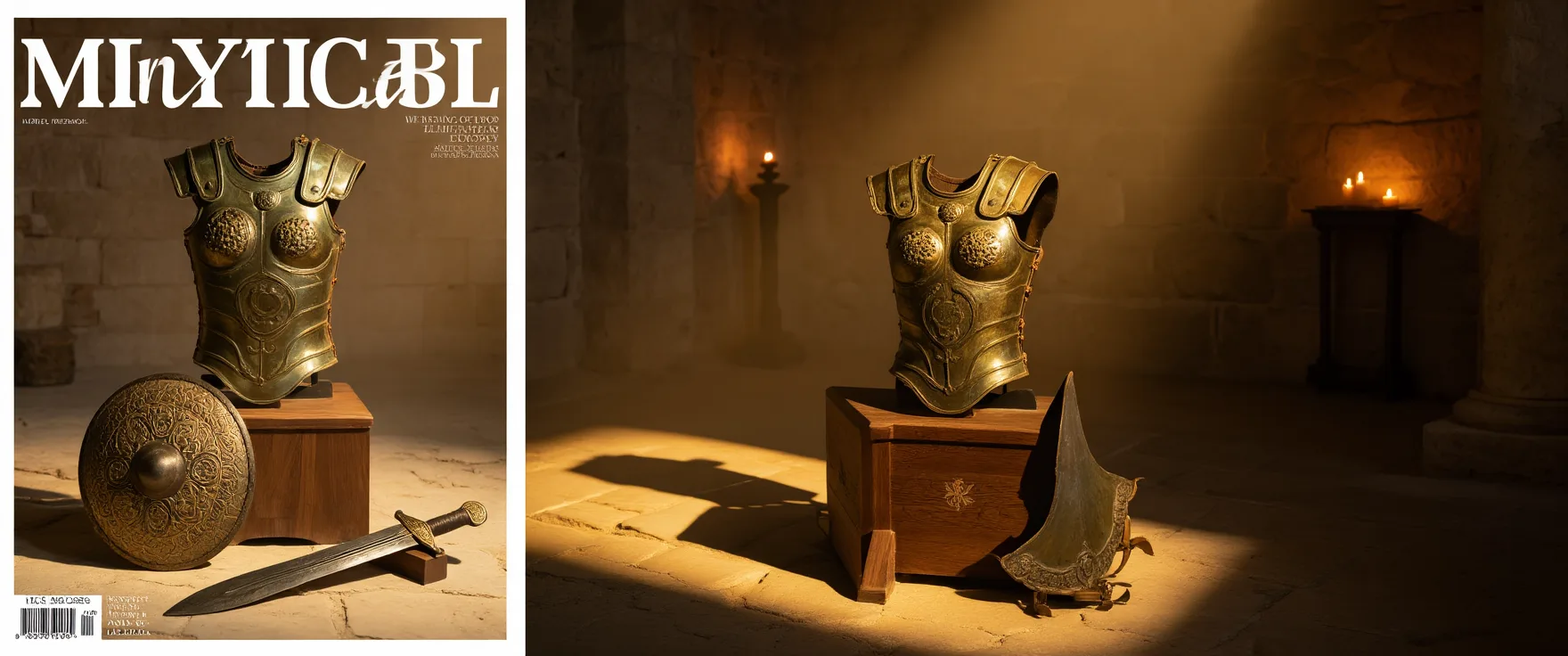
Paul couldn’t move. Under house arrest in Rome, he sat chained to a Roman soldier, wrist to wrist, around the clock (Acts 28:16, 20, 30-31). Guards rotated every few hours, and every guard wore the same equipment: the full kit of the finest infantry the ancient world had produced. Paul had a front-row seat to that gear for years, and somewhere between rotations he started seeing his own life in it. Ephesians 6 is what came out of that cell.
The armor of God deserves that context. It wasn’t a metaphor Paul invented in a library. It’s a prisoner describing the equipment of the man guarding him, piece by piece, and translating each one into something his readers could wear.
Why armor at all
Paul never says the fight is against people. Verse 12 is blunt: “we do not wrestle against flesh and blood,” not against your boss, your in-laws, or the neighbor who parks in the fire lane, “but against the rulers, against the authorities, against the cosmic powers over this present darkness.” Whatever you make of the cosmic language, the point is that the real fight runs underneath the visible one. It’s the fight against deception, against despair, against the quiet voices that tell you you’re finished, or that you’re fine, when neither is true.
Armor is how you survive a fight you didn’t start. You don’t put it on to hurt anyone. You put it on to still be standing when the smoke clears. You can read the passage yourself at Bible Hub.
The belt of truth
A Roman soldier’s belt, the cingulum, did two jobs. It held the rest of the kit in place, and it marked the man as a soldier. Take the belt off and he was just a man in a tunic, off duty, nobody to fear. Belted, he was the empire.
Paul calls it the belt of truth, and the Greek word matters: not “facts” but truth, alētheia, the opposite of hiddenness and pretense. Facts are what’s on the report. Truth is what you can build a life on. It’s the difference between saying the right thing and being the same person in three different rooms. (You can trace the word yourself at Blue Letter Bible.)
A lie is a strap that comes undone at the worst moment. Integrity, small, boring, daily integrity, is what keeps the rest of the armor where it belongs. And truth starts in the mirror. The lies that do the most damage are the ones you tell yourself:
- “I’ll deal with it tomorrow.”
- “They won’t notice.”
- “I’m the exception.”
The breastplate of righteousness
The lorica, the breastplate, guarded the vitals. Heart, lungs, everything you need to keep living while someone is trying to stop you. Paul’s word for what protects that territory is righteousness, and he doesn’t mean the grim project of being perfect. He means being right with God: a standing you didn’t earn and can’t lose.
This is the piece that protects you from accusation. The voice that says you’ve blown it too many times, you don’t belong at that table, you’re a fraud and everyone will find out, that voice goes for the chest. The breastplate answers with a fact: you are not defenseless against your own record. When you’ve actually messed up, righteousness is grace, not gritted teeth.
Boots that hold their ground
Roman infantry wore caligae, heavy sandals with iron hobnails hammered into the soles. The empire’s army was a walking army; it conquered by marching, and its soldiers could stand their ground on almost anything. Paul says your footwear is the readiness of the gospel of peace, which sounds backwards until you think about what peace is for.
Panic slips. Peace holds ground. The peace Paul means isn’t the absence of conflict; it’s the settled knowledge that God is not against you, so the ground under you isn’t going to give way. A soldier with bad footing loses fights he should win. Peace is your footing in the middle of the fight, the thing that keeps you planted when everything around you is moving.
The shield of faith
The scutum was a wall, not a lid. It stood four feet tall, layered wood and leather with a metal boss at the center, and in formation Roman shields locked edge to edge so a whole unit became one surface. When enemies fired flaming arrows, real arrows wrapped in pitch and lit, the shields caught them and let them burn out inches from the soldier’s face. (The scutum is worth a look: Wikipedia.)
Paul says faith is that shield, which means faith isn’t the absence of arrows. Doubt comes, temptation comes, the old accusations come, and faith is what catches them. Not by pretending they don’t hurt, but by holding up what you know is true until the fire burns out. You don’t need to see the whole battlefield. You need to hold the shield.
The helmet of salvation
The galea protected the head, and head wounds were how battles were lost. A soldier can take a dozen hits and keep fighting, but a knock to the skull ends his war. Paul calls the helmet salvation, and the practical name for it is hope: knowing how the story ends.
Despair is the knockout blow of spiritual warfare. It’s the hit that makes you stop trying, stop believing, stop caring. The helmet is what receives that blow. You know the ending. The battle is real, but the war is decided, so the despair that would flatten you glances off instead. Hope isn’t optimism. Optimism depends on the news. Hope is armor.
The sword of the Spirit
The gladius was short, double-edged, built for close work at arm’s length. It is the only offensive weapon on the whole list. Everything else receives. The sword advances. Paul names it plainly: “the sword of the Spirit, which is the word of God” (Ephesians 6:17). If you want the details on the blade itself: Wikipedia.
Jesus is the model for this. In the wilderness, tempted three times, he didn’t argue, didn’t reason from feelings, didn’t mount a defense. He answered with Scripture, three quotes from Deuteronomy, and the temptation ended. The word is the one tool that moves the fight forward. It’s the weapon you use against the lies, which raises a practical question: do you know it well enough to use it under pressure? That’s a skill, and it’s learnable. Reading Scripture like a scholar is a good place to start.
The piece Paul adds: prayer
After all the equipment, Paul adds something that isn’t equipment at all: “praying at all times in the Spirit” (Ephesians 6:18). It’s easy to read as an afterthought. It isn’t. Armor doesn’t march by itself. Prayer is the soldier’s line to command, not the emergency call but the standing line. You don’t pray to get the armor. You pray to stay in the fight wearing it.
And “at all times” is the detail. Not just in the crisis. Before the crisis, in the boring middle, in the car, at the desk, in the kitchen. Prayer at that level is unglamorous and unimpressive, which is probably why it’s the easiest piece to skip. It’s also the one that makes all the others move.
Put it on before you need it
Here’s the thing about armor: it has to be on before the fight. Nobody straps on a breastplate mid-arrow. Paul knew what he was writing about. A man in chains, helpless by every visible measure, still described himself as fully armed. That’s the claim of this passage. The fight is real, but you are not standing in it alone, and you are not standing in it empty-handed. Belt, breastplate, boots, shield, helmet, sword, and prayer. Put them on in the morning, when the day is quiet, and you’ll still be standing when it isn’t.
Written by
JellyPuff Media
Editor-in-Chief
Auckland-based publisher producing warm, honest Bible study content for readers everywhere.
Keep reading
Related articles

Salvation: What the Bible Actually Says About Getting to Heaven
Everyone wants to know how to get to heaven, but the Bible's answer is more surprising — and more generous — than most people expect. Here is what Scripture actually teaches.

How to Pray: What Jesus Actually Taught About Talking to God
Jesus' disciples asked him for one thing above all else: teach us to pray. What he taught was not a formula but a way of coming to the Father — bold, honest, persistent, and already heard.

When Heaven Seems Silent: What the Bible Really Says About Unanswered Prayer
Every praying Christian meets the silence — the prayer that seems to bounce off the ceiling. Scripture does not explain it away. It gives us language for it, companions in it, and a Saviour who prayed through it.