How We Got the Bible: From Scrolls to Modern Translations
Scribes, scrolls, councils and translators — how sixty-six books written over fifteen centuries became the Bible you can read on your phone, and why scholars are so confident in it.
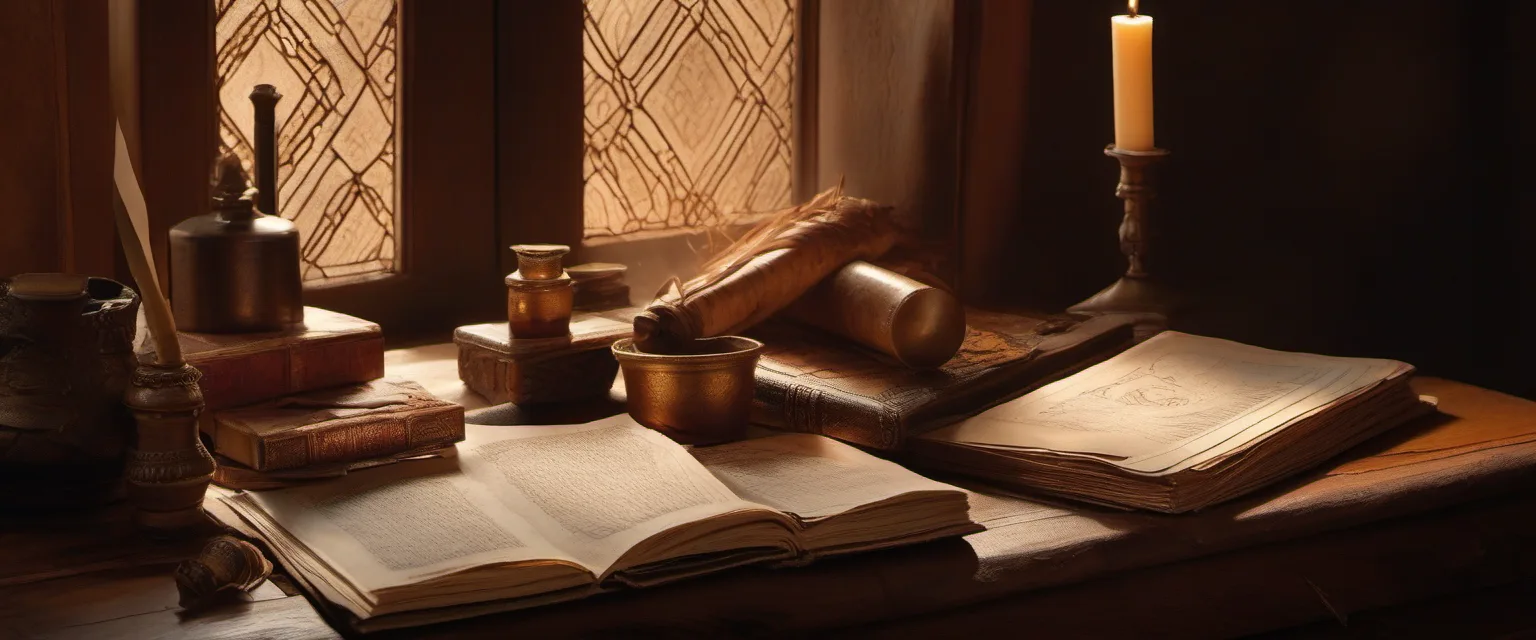
The Bible you can read on your phone tonight is the end of a chain that runs back thirty-five centuries. It was written by more than forty human authors, in three languages, on three continents, over roughly 1,500 years — and then copied, collected, translated and transmitted by thousands of anonymous hands. The question of how we got the Bible is really three questions: how were the books written, how were they preserved, and how did they end up in one book?
The Old Testament: scribes and scrolls
The Old Testament was written mainly in Hebrew, on papyrus and animal-skin parchment, in the form of scrolls. Scrolls wear out, so the text had to be recopied by hand, generation after generation. And here is where Jewish scribal culture did something unprecedented: it built a system of copying so obsessive that it borders on the miraculous.
The Masoretes, the scribes who standardized the Hebrew text between the sixth and tenth centuries AD, counted everything. They counted the letters in each book, marked the middle letter of the Torah, and built rules about spacing, spelling and pronunciation. A scroll with a single error was destroyed. The result is a text tradition of staggering fidelity — and in 1947, the Dead Sea Scrolls proved it. The Great Isaiah Scroll from Qumran, copied around 125 BC, differs from the medieval manuscripts a thousand years younger in ways that are almost entirely trivial. A millennium of copying produced no meaningful change.
The New Testament: an embarrassment of riches
The New Testament was written in Greek between roughly 50 and 95 AD, and it exploded in copies almost immediately. Christians were a copying people — the letters were read aloud in church, traded between congregations, and transcribed constantly.
The result is the most well-attested book of the ancient world. We possess more than 5,800 Greek manuscripts of the New Testament, plus about 10,000 Latin copies and thousands more in other languages. The earliest fragment, a scrap of John’s Gospel known as P52, dates to about 125 AD — within a generation of the original. Compare that to the classics: we have about ten copies of Caesar’s Gallic Wars, the earliest made 900 years after he wrote; seven copies of Plato, the earliest a thousand years after. For the New Testament, the gap between the events and our earliest copies is measured in decades, and the number of copies in thousands.
None of this means the copies are identical. Textual critics have catalogued tens of thousands of variants between manuscripts — a fact skeptics love to quote and rarely explain. The overwhelming majority are spelling differences, word order, and slips that any hand-copied document accumulates. No variant affects a single doctrine of the Christian faith. The “corruptions” are dust on the lens, not cracks in the glass.
The canon: recognition, not invention
How did sixty-six books become the Bible? The popular myth is that bishops at a council — usually the Council of Nicaea in 325 AD, or a fictional “Council of Jamnia” — voted on which books to include, discarding the rest. The reality is both more boring and more interesting: the church recognized the canon the way you recognize a voice.
The New Testament books earned their place by meeting three tests: apostolic origin (written by an apostle or an apostle’s close associate), orthodox content (consistent with the teaching Jesus and the apostles had passed down), and universal acceptance (used by churches everywhere, not just one region). The core — the four gospels, Acts, Paul’s letters, the general epistles, Revelation — was in widespread use by 150 AD. When councils later “settled” the canon, they were not inventing a list; they were formally acknowledging a list that had been functioning for two hundred years.
The Old Testament canon was inherited from Judaism: the Law, the Prophets, and the Writings — the same three-part structure Jesus refers to when he speaks of “the Law of Moses, the Prophets and the Psalms” (Luke 24:44). By the time of Jesus, the books of the Hebrew Bible were settled, and Jesus and the apostles quote them as Scripture with complete confidence.
Translations: the Bible in every tongue
The Bible began traveling across languages almost immediately. The Old Testament was translated into Greek in Egypt starting around 250 BC — the Septuagint, the version the apostles themselves quoted. As the gospel moved west, Latin translations followed, culminating in Jerome’s Vulgate (405 AD), which became the Bible of Europe for a thousand years.
The great age of translation began with the Reformation. William Tyndale’s English New Testament (1526) was so dangerous that he was strangled and burned for it — with a copy of his own translation tied around his neck. The King James Version of 1611 followed, and for four centuries it shaped the English language itself. Today the Bible is available in more than 700 complete translations and thousands of partial ones, from the scholarly ESV and NIV to the conversational NLT and The Message. The best modern translations are not “dumbed down”; they are built on better manuscripts and sharper linguistics than Tyndale or the KJV translators ever had.
Why it all matters
The doctrine the whole transmission history points to is in the text itself: “All Scripture is God-breathed and is useful for teaching, rebuking, correcting and training in righteousness” (2 Timothy 3:16). The Bible claims a divine origin — but it came to us through thoroughly human means: hands that copied, scholars who argued, translators who died, committees that edited. That is the scandal and the glory of the book. God did not drop it from heaven; he spoke through people, and he has preserved it through people.
The practical upshot is confidence. You do not need to be a textual critic to trust the book in your hands. The evidence is not that the Bible is error-free — no ancient book could claim that about its copies — but that it is reliable, more reliably transmitted than any other text of antiquity. When you read it, you are reading what the prophets and apostles actually wrote, preserved by a God who promised that his word “will stand forever” (Isaiah 40:8).
For the stones that corroborate this book, see Archaeology and the Bible. For how to use the tools of the trade, see Reading Scripture Like a Scholar.
Written by
JellyPuff Media
Editor-in-Chief
Auckland-based publisher producing warm, honest Bible study content for readers everywhere.
Keep reading
Related articles
Archaeology and the Bible: Stones That Speak
From the Pool of Siloam to the Pilate Stone — what a century of digging has actually confirmed about the biblical world, and what it hasn't.
Who Wrote the Pentateuch? The Case for Moses
The Documentary Hypothesis versus the traditional view — what the text itself, ancient Near Eastern parallels and Jesus's own testimony say about the authorship of the first five books.
Esther: The Book Where God's Name Never Appears
The book of Esther never mentions God by name, yet every page turns on his quiet work. A feast, a queen, a sleepless king, a gallows — and a providence that never introduces itself.